


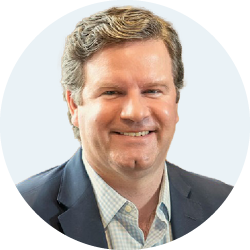
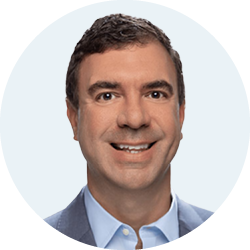
Matthew Drasser
Welcome to our podcast series, Checking In, Looking Ahead. In today's episode, we're talking about public fixed income. My name is Matt Drasser, Senior Director, U.S. Business Development, at SLC Management. With me is D.J. Lucey, Peter Kramer and John Fekete. D.J., if you don't mind introducing yourself and telling us your name, title and then what segment of the markets you're focused on, that'd be great.
D.J. Lucey
Sure. Thanks, Matt. My name is D.J. Lucey. I'm a Senior Managing Director and Senior Portfolio Manager with SLC Fixed Income. I focus on total return strategies and specifically the securitized credit sector.
Matthew Drasser
Peter?
Peter Cramer
My name is Peter Kramer. I'm a Senior Managing Director, U.S. Insurance Asset Management, focused on investment grade (IG) multi asset class portfolios for insurance clients. Maybe I'll hand it over to John now.
John Fekete
Matt, great to be with you today. John Fekete, Managing Director and Head of Tradable Credit with Crescent Capital which is an affiliate of SLC Management, focused on non-IG corporate credit, and I oversee the tradable credit platform at Crescent and I'm the lead portfolio manager for a few of our strategies.
Matthew Drasser
Awesome. Perfect guys. So, we've got a pretty straightforward plan. We've crafted a couple of good questions. The idea here is to cover the market and kind of pull out the major themes and how we're looking at things now. I think that my number one observation as I travel and work with clients and consultants is, how do we allocate risk in today's market? And that's where we're going to spend the bulk of the conversation. We'll start there. Then we'll take a quick look back at where we've been thus far in 2025 and then we'll take a look forward at what we can expect over the next 3–6 months. So, with that, why don't we get right into it. My first question regarding where we are today is sort of a broader question for each of the panelists. We'll start with Peter. Peter, where are you seeing value today in your markets?
Peter Cramer
No problem, Matt. I think one of the big drivers of managing money for insurance portfolios is having a view both on the interest rate component and on the spread component, because at the end of the day the yield and particularly the income that the portfolio generates is really paramount for the insurance client base. One of the largest challenges we've seen in the fixed income market in general has just been the reduction in rates. Rates are down about 75 basis points year to date, which has really posed a bit of a challenge for, I think, the overall momentum of the fixed income sector broadly. The other thing that I think has really driven a lot of the conversation with our clients has been a discussion as to whether or not this is the time to lock in yields with the prospect of the U.S. Federal Reserve continuing to cut rates or if you should just continue to focus on wherever parts of the curve you think offer the best relative value. We have seen more recently that I think some of the pockets where you are seeing spreads, at least not at all-time tights, are in the front end of the curve. So, a lot of floating rate products, as well as shorter-duration products, within the securitized sector have been where we've found the most value. And again, the tradeoff there is that you have to decide how much you want to capture today's yield at higher spreads versus locking in potentially higher yields at lower spreads, but then having that on your books for a longer period of time. So, I'd say that conversation is really driven most the asset allocation decisions and I'd say it's very much still an open question at this point.
Matthew Drasser
Outstanding. D.J.?
D.J. Lucey
Peter brought up a couple of great points. I think what we're feeling in the market similarly is that technical backdrop of fund flows and high demand for fixed income – really since the middle of 2023 after the record setting rate hikes in the front end – that started to wane a little bit like Peter said, with some of the decline in yields. But we're still seeing extremely tight corporate credit spreads versus longer historical time frames. So, where we're seeing value is still in the securitized sector. Things like asset-backed securities (ABS), things like commercial mortgage-backed securities (CMBS sector) – they look very wide compared to comparably rated corporates. And they also tend to be short- to intermediate-duration securities, where we do feel like, from a longer-term perspective, getting that yield advantage and that extra carry is paramount. So, you're picking up yield and you're not necessarily giving up ratings or giving up risk. In fact, we've had this discussion with John, and where we intersect a little bit in collateralized loan obligation (CLO) market is in the BBB or single-A CLO market. We think we're actually, in some cases, getting better credit risk while still picking up spread advantages versus arguably very tight corporates. So that's how we're viewing the market today.
Matthew Drasser
Awesome. John, I want your thoughts on the market, but before we get to that, do you mind defining the market in which you transact a little bit more? Tell us how it differs from the IG markets that Peter and D.J. are working in and then we'll kind of get to where you're seeing value.
John Fekete
There’s a bit of a difference with my colleagues D.J. and Peter. Just about everything we're doing is non-IG corporate credit. The one exception to that is what D.J. mentioned, which is CLO debt, which spans both IG and non-IG. So, there's a lot of different ways investors can access that. But beyond that, we're talking about things like leveraged loans, high yield bonds, stressed credit, pretty much things that are generally rated BB or lower, but that are liquid, open-ended and trade through a trading desk.
Matthew Drasser
Could you comment on where you're seeing value today in your market?
John Fekete
The first thing I would mention is where we are today. Our view is that there's sort of a gap between how investors feel, which is somewhat gloomy, and the actual underlying fundamental data, which I would characterize as just fine. If I put aside the noise – and noise to me is anything that's not necessarily proven true, it distracts, it confuses – and I actually focus on the signals which are the facts. Levered-borrower health is pretty good today. Leverage for the high yield universe, for example, is around four-times. That's the lowest level of leverage in high yield in over 20 years. The amount of debt coming due in the next three years – which is really historically been something that could cause a lot of stress or distress – that level of debt coming due in the next three years is very modest. Default activity is very modest. When we look at these factors, we actually have a pretty constructive view on credit in terms of specific sectors. Two that I would draw to your attention to: one we already mentioned is CLOs. Now with CLOs, you can invest in IG-rated debt tranches. You can also invest in the equity depending upon your risk–reward tolerance. Those are interesting – probably some of the last remaining areas that offer a lot of spread in what's become quickly a low-spread environment. The other is in narrowly syndicated credit. So, these are syndicated loans, corporate loans, but to what we call mid or core middle market borrowers. These offer interesting yields at this time. So those are two areas that we think look interesting in the market today.
Matthew Drasser
Why don't we next talk a little bit about whether or not we're being compensated for risk. Spreads are tight. I think it's a question on a lot of minds whether or not they're being well compensated to take risk in this market. And I think one of the biggest questions right now is how we are thinking about risk, measuring and monitoring it, in today's market, and how would you allocate risk in this environment. Peter?
Peter Cramer
I think Matt, in a lot of ways this is like the most important question that we hear from our client base. I think broadly in the market is exactly that like how we should think about risk right now. A couple of things that I would point out: one of the things we like to do is disentangle that question a little bit. Firstly, overall, where do you want to sit on the overall risk spectrum? So, if you had a budget of like 10 and you're trying to decide where you want to sit on the overall risk spectrum, do you want to be at a 3 or a 7 or somewhere in between? I think to the point John made earlier, it seems like investors by their positioning are saying one thing, but by their sentiment are saying something else. And what I mean by that is spreads. Across almost all the classes they’re at or close to their all-time tights. However, the sentiment of investors seems to be significantly poor. Contrast that with, again as John mentioned, the overall health of the economy, it still seems to be pretty strong. Maybe we can kind of talk later about some pockets where we have seen some concerns lately, but it does seem like, in aggregate, the economy is performing quite well. One of the things that I like to do in this environment is really think, “Okay, if the overall level of the economy is still supportive of having an elevated risk budget, what's the best way to deploy that?”. And there I think investors can get a little bit myopic and focus only on their specific asset class and say, “Well, it's very rich compared to its history,” which I think is true. The way I would turn that on his head a bit is when spreads are low is typically when you have a lot of compression between various points on the risk spectrum. For example, if equities are at their all-time highs, it typically means that the premium you're getting from investing in equities versus the next closest thing on the risk spectrum, let's call it narrowly syndicated loans for the purpose of this conversation, is relatively low. By the same token, the difference between the spread degrading in narrowly syndicated loans and, say, BBB CMBS is relatively compressed. And the spread between that and BBB corporates is relatively compressed, and the spread between that and Treasuries is relatively compressed. So, the playbook that I think we've had a lot of success talking to clients about is this: are there pockets in your portfolio that you can reallocate out of a higher risk bucket into things where you're still getting what is within that asset class, relatively tight spreads, but compared to the bucket you're coming from, a relatively narrow gap? For example, would it be worth considering selling down some of your equity exposure, which has been shown to be the more volatile part of typically a broadly diversified portfolio, and replacing that with something like narrowly syndicated credit. That’s where you're able to generate high single digit, if not maybe low double digit, type returns, which are typically considered equity-like returns, while being significantly less risky in terms of broader risk spectrum. I think ideas like this are where we're starting to see a lot of traction with the client base in terms of how can we rethink our overall asset allocation, with the context being everything's tight, but on a relative basis, you're probably paid to go down the risk spectrum as opposed to out the risk spectrum.
Matthew Drasser
Excellent. D.J.?
D.J. Lucey
I think we like to look at risk in terms of volatility and principal risk, like what Peter spoke about. But at the same time, if you have a little bit longer of a time horizon, going back to that balance of maybe not taking as much beta risk in terms of trying to predict spreads going even tighter from here, which looks less and less likely, and not just using IG corporates as a sort of broad barometer of credit, we still don't want to give up on income. That's where we're still balancing that risk with things in the short duration space, where you know the breakevens are still really attractive from riding out that income, and then just balancing that by having less longer-duration corporate credit risk. In the ABS market, there's some bifurcation going on between subprime and high-prime or high income consumers. But at the same time, the structural features of not just the ABS market but also, as John mentioned, the CLO market, still make many of those structures attractive for the income you're getting. So, even if you're in Peter's scenario, you take less risk. You look at something like a AAA CLO structure, in which I think even just one single-A CLO in the Global Financial Crisis took a principal loss; you go above single-A, there’s a very loss-remote structure. You're still getting a healthy triple-digit spread, and then you're getting that carry in the front end. We do feel like, in the securitized sector, there's ways even just within that that space to take either more or less risk. But versus more liquid IG corporates, we do see and track that relationship between those sectors, and you're getting paid across the securitized space.
Matthew Drasser
John, how are you allocating risk right now?
John Fekete
Well, Matt, you asked about being compensated for spreads and spreads are low, right? But also for a bunch of reasons I mentioned, in the non-investment grade world, they should be low because defaults are very low and expected to stay around 2%. And we mentioned leverage for our high yield universe is the lowest it's been in 20 years and there's hardly any companies that have debt coming due in the next three years. So, from a fundamental standpoint, it's understandable why spreads are low. There's ways that you can take advantage of getting higher spreads and yields. And yes, maybe you're taking more liquidity risk, but not necessarily credit risk. And that's an important distinction: some of the ideas where we're all looking today, in many ways we're not necessarily taking added credit risk, but we're just moving into things that might be slightly less liquid. And for many institutional investors, they have pockets for that in their portfolio. I don't really worry much about the fundamentals today. I'm more worried about monetary policy. If you want to know what keeps me up at night, our central bank has been late to the game before in 2020 and 2018. There's a bit of a history here being a repeat offender, too slow to adjust rates based on market conditions, and that's really what I'm worried about.
Matthew Drasser
D.J. and John, you guys have both mentioned the CLO market. For the broader audience, would each of you mind taking us through what a CLO is? And then just elaborate a little bit on the sort of risk–return profile of that sector.
D.J. Lucey
I'll take a first crack at it and then transition to John, because I think what's underlying the CLO is, of course, one of the near-and-dear to the heart specializations for John and his teams, is that leveraged loan market. But a CLO, or a broadly syndicated CLO (BSLCLO), it stands for collateralized loan obligations. What it is, is a portfolio of corporate credit, non-IG corporate credit in the form of primarily first-lien leveraged loans across a variety of different industries. These are then structured into various tranches for various investor preferences on credit risk. The seniormost tranche often comes with an AAA rating. It's a floating rate debt security, and it also benefits from the diversification of the entire leveraged loan market. So, most CLOs have well into the triple digits in terms of number of holdings. They're very diversified in terms of potentially any one single name defaulting or coming anywhere close. Even the BBB or most of the BB tranches are pretty well insulated as well. So that's what the CLO structure looks like: now an AAA security might have something like 30% credit support. What that means is if you had a 50% loss on a on a given default, you know you would need something like 60% of the entire loan universe to go bad with more of a loss severity than that. It's extremely unlikely it would be multiple “2008s” in a row. When you're in the higher tranches, that's where that value we think can be really attractive even if it's not the highest yielding security across credit markets – per unit of risk they have value across the stack. I'll pause and if John wants to chime in on anything I missed.
John Fekete
It's a great setup, D.J. I would just add that CLOs can play an important role in a portfolio because they have a lower correlation to traditional fixed income asset classes. They fit nicely in the construct. They typically have high Sharpe ratios and low interest rate duration. So, there's some value there. This is a $1 trillion asset class; we're not talking about a niche asset class where it's not been cycle tested. This is a very large asset class that's been mature and tested over 30 years. The last thing is, there's a couple ways you can participate. BSL is the largest and most common way, the underlying assets being loans. And of course, as D.J. mentioned, you can go from AAA on down to BB or even in equity depending on your risk–reward tolerance. The other purpose they can serve as a use case is there's something called “middle market CLOs.” This is one of the fastest growing corners of fixed income. It's the tried-and-true CLO structure, but instead of buying large cap BSLs, you fill it with middle market, private credit, direct lending or whatever terminology you want to use. This becomes a bit of a proxy for private credit, in something that has an IG wrapper and also is very liquid. All of these things that we're talking about settle T+1, so you're not locked up for many years in private credit or in a fund. You can get exposure to the underlying in something that can be traded T+1, which is really interesting and something we think is likely to grow over the next few years.
Matthew Drasser
I'd like to talk just briefly about liquidity. John, I'm going to go back around to you. Can you comment on liquidity in the CLO market?
John Fekete
I would characterize it as healthy. First, the settlement day of T+1 is nice because I think of liquidity in a couple ways. Sometimes it's bid–ask spread, sometimes it's “I sell something today, and how long does it take before the money's in my pocket? And if it's in my pocket tomorrow, that's pretty prompt.” And the other is based on the size of the market. I know this is not always perfect, but generally speaking, as asset classes get larger and average daily trading volumes grow, those asset classes become more liquid. So, a trillion-dollar CLO asset class, you're going to see that trading very regularly. I would consider these to be very liquid securities.
Matthew Drasser
Awesome. I want to broaden that question out to your high-level sectors. Peter, do you mind starting off? Just how are you thinking about liquidity in the context of today's market?
Peter Cramer
I think this is another really key issue that I think we see our client base grappling with a little bit because liquidity can mean a lot of things. I think to John's point, it can mean how quickly can you get your cash back. It can also be a strategic lever that you can use in your portfolio to the extent that you have the ability to what we call “sell liquidity.” Let's say it's a life insurance company, and you know with a high degree of certainty when you're going to have to pay out on some of these claims. You have the ability to not have to access capital for a foreseeable amount of time. So, you have the ability to take on a little bit more liquidity risk than you if, for example, you were an auto insurance company, where you're not quite sure when you're getting your next large claim or a fire incident in California. I think the ability to strategically use liquidity to the benefit of your portfolio is where we spend a lot of time working with our clients. And I think there's a lot of interesting things that can happen that are sort of agnostic to asset classes, where you can structure your portfolio in such a way that maybe we're able to engage with the home loan bank on the insurance company side to be able to essentially have like a line of credit to be able to tax this liquidity without requiring you to sell holdings in your portfolio. All the way down to the individual asset class liquidity, where again I think in today's market just about every asset class has high degrees of liquidity. But depending on how you define it, liquidity is very much, I think, a two-way type of prospect. In order for something to be considered liquid in my mind, I think it has to have both a very strong buying market and sellers’ market. I think anytime a market gets one sided, which again when you have spreads at all time tights, I think you have to be at least somewhat concerned that you're having a bit of a one-directional market. I think liquidity can be a bit of a bit of a false promise there because if you're in the market to try and buy things right now, it'd be pretty challenging. If you're looking to sell, it's quite easy. If that were to flip on its head and if we were to see some of that reverse, I think we could find liquidity feels quite challenging in a lot of these sectors, like if you were to try and sell and a lot of people were trying to get out of the proverbial movie theater when someone called “Fire!” at the same time. So, just thinking through in anticipation of that type of event, what's the reasonable level of liquidity you need to have in your portfolio? Or to put it differently, like to John's point, how much cash do you need to be able to settle your account tomorrow? And how much are you comfortable saying, “There'll be some volatility here, but I know I don't need to sell this because in the worst case scenario I have this pool of capital, and I'm comfortable that I can access it to pay claims or to furnish debt or whatever you might need that money for.” The rest of it you can afford to “lock up” for a little bit longer and enjoy the benefits of that liquidity premium.
Matthew Drasser
Tremendous. D.J.?
D.J. Lucey
The securitized market has various forms of debt and also various forms of liquidity. I think one of the most notable characteristics would be that most of the market is still a little bit old school where they're over the counter markets. And if someone has a strong bid for something, you know it's not necessarily electronic trading. It's brokers calling you or instant Bloomberg messaging you saying, “Hey, you know that bond that you thought was worth $0.88 on the dollar? Well, I have a guy that's willing to pay $0.90 now, and would you sell at $0.90 or $0.91 even. So, I think that when you're in that kind of a market, you know the value can be higher because if you're willing to take on a little bit of an illiquidity premium, you might not necessarily be taking more credit risk. It's just not as an electronically traded market would be, or in terms of what the Treasury market would be, as kind of the easiest way to understand some of the purest forms of liquidity. But you are able to get extra risk premium. Or, what that means in plain language is just extra yield or extra spread pickup. So, some ABS, CLO or CMBS tranches: sometimes it can be the $20 million, $30 million or $40 million, that those aren't the largest tranches. But you can, on the flip side, get to select for your risk and return preference in terms of how much risk you're willing to take – in terms of various forms of loss cushion which is credit enhancement – and then what yield you would get in return for that.
Matthew Drasser
Excellent. John?
John Fekete
I can keep this very short. I would say that I would my preference at this point in the economy, I'd rather I'd be more comfortable at, say, taking something that had a weekly or monthly liquidity instead of daily versus loading up my portfolio with a bunch of CCC-rated loans and high yield bonds, companies that if they disappear tomorrow perhaps a lot of people wouldn't even miss them. So that's our view right now.
Matthew Drasser
Outstanding. So, as we discussed in where value is today and what are the risks, it seems to me that investors are cautious. There's a touch of optimism out there, I think really cautious optimism. The focus of investors is really on risk management and then being really selective with how you're taking that risk. This is the case in any market, but I think definitely in this one. So, what we'll do now is kind of zoom out a little bit, and I'm just going to ask a couple of questions. We're likely going to hit on things that we've already discussed; the idea here is to kind of really bring the largest themes to the surface. First, why don't we start with D.J.? I'll change it up a little bit: what are the biggest themes you've observed in your market over the first nine months of 2025?
D.J. Lucey
I would say there's just a very high correlation with policy coming out of the White House and other asset classes. You saw some of the best opportunities to maybe sell risk and get incredibly tight levels, which translates to higher prices in, say, February. And then during the kind of the peak of the tariff threats, you saw some opportunities to buy, but that went away relatively quickly because of the perceived notion that there'd be some trade agreements that that took place. So, I think that broad theme of just looking at cross-asset correlation, that if you get something that is a lot cheaper but maybe not necessarily for any fundamentally specific thing to that one issue, those are times that you get a chance to buy.
Matthew Drasser
Outstanding. Peter?
Peter Cramer
I think one of the biggest risks that we've seen so far in the course of the year is just that people are impatient, to be honest, with the level of compensation, and then, I think, making the mistake of going too far out the risk spectrum. I think this can be very tempting in an environment where, to John's point, the macroeconomic environment remains, for all intents and purposes, very supportive. And I think the inclination is to try and achieve yield anywhere you can. If you can't get as much of it via the risk-free rate as you could before, because as we mentioned rates are lower, then I think the urge is to reach for whatever the highest spread is. And to my point earlier, I think that the better way to be thinking about risk is what the most optimal combination of risk and spread is, not just what the highest spread is. I think the risk is that is that investors get sort of lured into a higher yielding asset class just because of the spread component without considering the downside risk and the fact that pretty much all asset classes are at their all-time tights at this point.
Matthew Drasser
Awesome. John?
John Fekete
I think the biggest theme this year is: “Where's the recession?” I remember it wasn't too long ago that three out of four economists were predicting we'd be in a recession. They were pointing to things like the aggressive Fed rate hikes in 2022, the inverted yield curve, the ISM Purchasing Managers’ Index contracting, a whole bunch of reasons why. Maybe historically these were indicators indicating a recession was likely. And obviously it didn't happen, and so many economists got it wrong. Why did they get it wrong? I think is an interesting thing: we don't have time to dig into it today, but the point is things are more buoyant than people expected. As I look ahead to the remainder of this year in 2026, I do think the economy looks pretty good. Is it without risk? Absolutely not. There are plenty of things that keep us up at night, but generally speaking, you've got fiscal stimulus coming. We haven't talked about that, but there were tax cuts that were implemented this year that'll kick in next year: tax cuts, child tax credits, tax-free tipping on overtime pay, lower corporate tax rates, lots of things that could create more momentum around investment and corporate investment and maybe put more money in the consumer's pocket. I think there's reasons to be optimistic as we look to move into 2026.
Matthew Drasser
D.J.?
D.J. Lucey
Just to add a little bit to what John's saying, I think you're seeing some of the largest technology companies in the world spending a lot of money on their own capital expenditures on data centers and infrastructure with their projected growth around AI now. Some have some trepidation about this, but at the same time if you look at some of the largest, most prominent tech companies in the world, they generally are very cash rich and have extremely manageable leverage on their balance sheets. I would just add that to John's list of reasons to be optimistic, we feel like some of these companies know what they're doing and they see opportunity.
Matthew Drasser
Coming back to you, D.J., very briefly, how do you summarize the mood of investors in the securitized space?
D.J. Lucey
I think it's a little bit more mixed in securitized than some of the other areas where sentiment seems frothy. Because CMBS is a big part of the securitized market. CMBS effectively had its own mini-recession coming out of 2022 and into the middle of 2023, with commercial lending drying up and the kind of well-known problems around office. But I would say the markets have come back quite a bit, and there's value we had there by doing the credit work. Not every commercial real estate asset is a class B office. That more mixed sentiment I think is where you get the value opportunity. I would say a similar thing in subprime auto: there was a well-known bankruptcy in the market, but we feel that was a very idiosyncratic event that happened, that involved fraud and lending to undocumented people. So, we think that some of that negative sentiment and mixed sentiment that's out there is just giving us an opportunity to invest.
Matthew Drasser
Outstanding. Peter?
Peter Cramer
I'd say I characterize sentiment as “cautiously curious” more than anything else. I think there's still very much an appetite to explore what other asset classes have to offer. I think insurance companies in general are still very much in the process of kind of expanding the available array of asset classes on the menu, if you will. And then I think about some concerns about how the standard traditional asset classes – IG corporates and some of your plain vanilla securities – aren't necessarily giving you the spread that you might need. I think there's still a bit of a desire to explore some of the more esoteric parts of the market: things like rated notes and some of what John was mentioning in terms of the middle market CLOs – these continue to garner a lot of interest. So that's the curious part. And the cautious part, I think just stems from again kind of John's question of “Where's the recession?” Is the recession coming? Do we need to be concerned about the fact that the economy is maybe performing worse than what the limited data we're receiving would lead us to believe? Because again, that would sort of weigh into whether or not you should be considering wading into some of these more esoteric parts of the market or not.
Matthew Drasser
John?
John Fekete
I hear investors talking more about liquidity and it seems to me that from a sentiment perspective, liquidity is back in focus. You can still get mid–high single-digit yields in many of the things that we're all talking about today in a liquid, open-ended, evergreen-type format. I think there's interest in what we would consider to be liquid or semi-liquid investments where you can get the required yield without having to sacrifice a tremendous amount of liquidity. I couldn't have said that three or four years ago, but now you can say that.
Matthew Drasser
Okay, two more quick ones here. Peter, if you were to put your finger on the biggest risk in your market, what is it and why?
Peter Cramer
Again, I think that the biggest risk in my market probably revolves around people just getting overextended on the risk spectrum at this point. I don't think we've had a real true liquidity event. For the most part for insurance companies, it's going to be driven by big changes in the severity or frequency in terms of claims they're experiencing depending on the line of business. I'm overgeneralizing, but by and large that experience has been pretty positive. So, we haven't seen a big, unexpected drawdown in terms of the liability side of the balance sheet. I’d say the asset side hasn't needed to be tested as much. I think the biggest risk there is that we do see some type of one-off event that would cause liquidity to become a real issue, because I think insurance companies have continued to migrate into some of the more esoteric and, by definition, less liquid parts of the market.
Matthew Drasser
D.J.?
D.J. Lucey
Within CMBS and commercial real estate, I think there's just business models that that have changed. It's really important to focus on fundamental security selection and underwriting. While we love the sector because of the attractive yields and spreads, we joke that if we look at our analysts, for every 10 deals that they look at we probably only invest in one of them because we spend so much time trying to be comfortable with the valuations we're seeing. We're picky, and I think if you're broadly looking at some of the older-stock class B office, I do think some of the hybrid and flexible work models continue to weigh on that sector from an ability to refinance. I do think that's going to be a more of a longer-play game, but that's not all negative because we do also see some of the highest spreads across credit markets per unit of ratings in something like a BBB CMBS sector. So, it's a little bit mixed there, where I think some of those risks are front and center, but that also creates value for us.
Matthew Drasser
John?
John Fekete
I'm going to double down and say it again: I think the biggest risk is around monetary policy rather than credit risk. That's what I worry about. If you keep rates too restrictive for too long, you end up getting an increase in defaults and losses. It's one of the reasons why we like the narrowly syndicated credit space because with these smaller transactions, investors can get tighter documents and covenants that can result in better long-term outcomes. It's kind of the best of both worlds there. That's our take right now on risk.
Matthew Drasser
Let's put a bow on this. What is it you expect in your markets over the next 3-6 months. Peter?
Peter Cramer
Unfortunately, I think it's going to be a continued testing of investors’ patience. I do think we're likely to see the front-end yield curve continue to get dragged lower by concerns around the labor market and increased expectations that the Fed will be cutting those front-end rates. At the same time, I think we'll continue to see longer-end rates pushed higher by concerns about whether we’re providing stimulus to a market that's already tight. Inflationary concerns I think are lingering in the market as well, combined with general debt sustainability as most developed economies continue to run rather sizable deficits. I think will be enough to keep longer-end rates high. So, I think there'll be a continued question around how much you want to lock in longer-end rates for now, given that they might continue to rise, and how much you want to put all your eggs in the front end given that those rates are likely to continue to fall.
Matthew Drasser
Awesome. D.J.?
D.J. Lucey
Going back a few minutes to Peter's comments about yields declining across the yield curve from their some of their high points: if you look at the 10-year, it's now closing in on 4%. I still think that as long as we stay in this relatively range-bound environment on all-in yields, it's been supportive across credit markets. I think there's still that demand there for fixed income at these all-in yields that Peter was speaking about. If we see a dramatic regime change where rates are cut on the front end much more than we were currently expecting, maybe that changes those technicals and that demand for IG fixed income across the spectrum. We talked about a little while ago, as it relates to the securitized markets, I do think having a spread pickup almost universally across the board versus the corporate credit market – in a low-spread-volatility environment in corporates – if we had a higher-spread-volatility environment or, even just looking at global macro, higher VIX environment, I would expect to see some more opportunity than we're currently seeing, and maybe even some higher yields or wider spreads in some of the lower-rated securitized markets.
Matthew Drasser
And John, bring us home with your expectations for the next 3–6 months.
John Fekete
I would expect the labor market to continue to be in focus. I would expect some rate volatility. I think a bull case can be made here that we're going to see the economy accelerate with lower interest rates, more mergers and acquisitions, lighter regulatory touch from the administration. You're starting to see some M&A pick up already in a few different sectors. Perhaps it gets more broad-based; I think there is a bullish case to be made. But as always, underwriting is the most important thing. All the things we're doing in fixed income and credit, it's all about making sure that we get our money back and that's core to the DNA of all of us on the call today.
Matthew Drasser
Awesome. Well, that's all we've got. Thank you all so much for participating. This is Checking In, Looking Ahead, and I encourage everybody to visit slcmanagement.com if you have any other questions. Thanks for listening. Have a great day.
Sources: Bloomberg, Standard and Poor's, 2025. Content was recorded on October 14, 2025, and reflects views of the participants as of that date. SLC Management terms “expert” and “expertise” based on the level of comprehensive knowledge possessed by SLC Management investment specialists in a given sector of the private credit and/or real assets market.
This content is intended for institutional investors for informational purposes only. This information is not intended to provide specific financial, tax, investment, insurance, legal or accounting advice and should not be relied upon and does not constitute a specific offer to buy and/or sell securities, insurance or investment services. Investors should consult with their professional advisors before acting upon any information shared.
Diversification does not eliminate risk nor protect against loss.
Any statements that reflect expectations or forecasts of future events are speculative in nature and may be subject to risks, uncertainties and assumptions and actual results which could differ significantly from the statements. As such, do not place undue reliance upon such forward-looking statements. All opinions and commentary are subject to change without notice and are provided in good faith without legal responsibility. Financial markets are volatile and can fluctuate significantly in response to company, industry, political, regulatory, market, or economic developments.